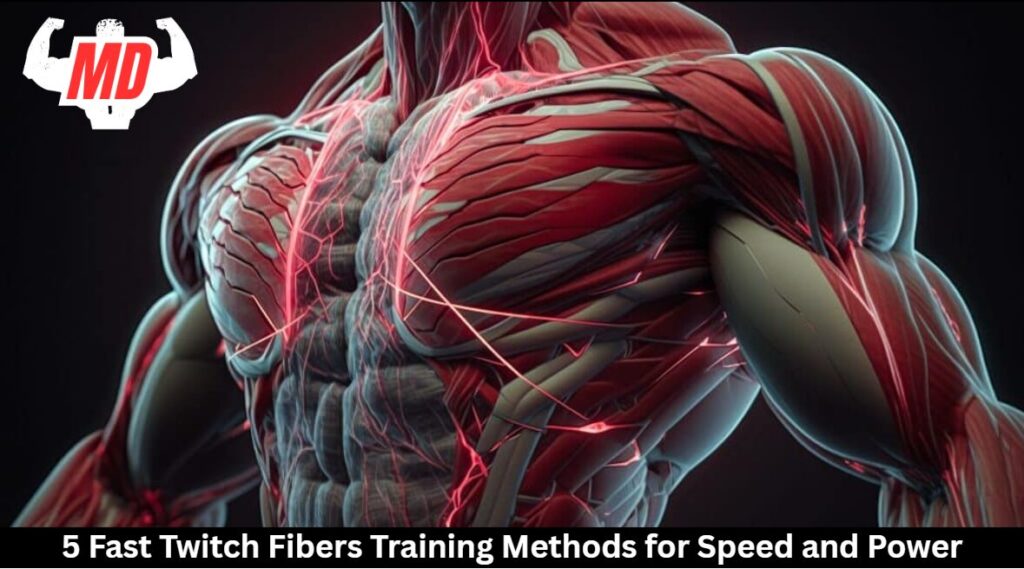
To train your fast-twitch fibers for speed and power, you’ll need methods that demand maximal effort. Plyometrics, like box jumps, activate them through explosive force. Heavy resistance training at 85–95% of your one-rep max recruits high-threshold motor units. Short sprints of 10 to 40 meters directly engage fast-twitch fibers. Olympic lifts like power cleans combine speed and load effectively.
Each method builds on the other, and there’s much more to uncover about maximizing your results.
What Makes Fast-Twitch Fibers Different?
Fast-twitch muscle fibers, or Type II fibers, contract rapidly and generate high levels of force, making them the primary driver behind explosive movements like sprinting, jumping, and heavy lifting.
Unlike slow-twitch fibers, they fatigue quickly but deliver superior speed and power output. They rely primarily on anaerobic energy systems, meaning they don’t depend on oxygen to fire.
When you’re training for explosive performance, understanding how Type II muscle fibers work gives you a strategic edge. Your nervous system recruits these fibers during high-intensity efforts, so low-load, moderate-pace training won’t fully activate them.
You’ll need maximal or near-maximal efforts to trigger their full potential. Recognizing this distinction shapes every training decision you make, from exercise selection to load intensity and rep ranges.
Use Plyometrics to Activate Fast-Twitch Fibers
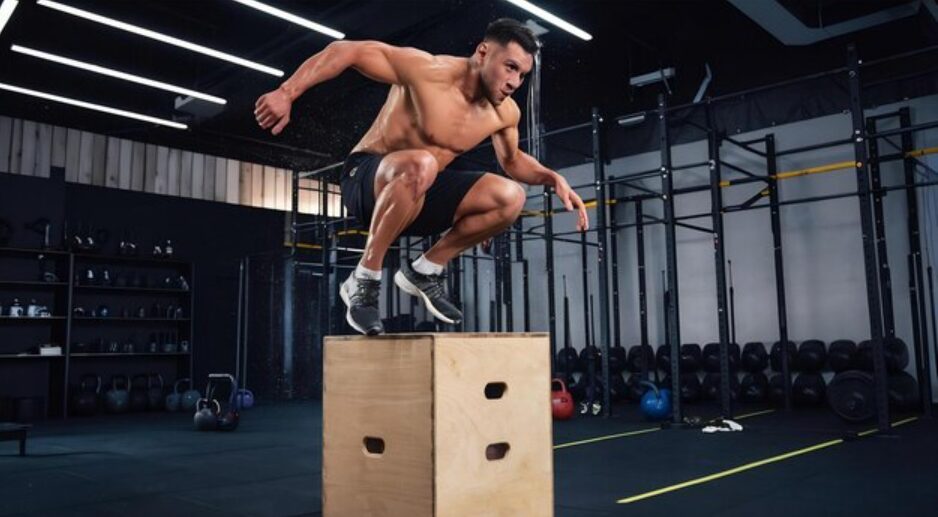
Plyometrics are one of the most effective tools for activating fast-twitch fibers because they force your muscles to generate maximum force in the minimum time. Through plyometric exercises like box jumps, depth jumps, and broad jumps, you’re training your nervous system to recruit Type II fibers rapidly and efficiently.
The stretch-shortening cycle is central to this process. When you land and immediately explode upward, your muscles store and release elastic energy, triggering fast-twitch activation at its highest level.
To get the most from explosive strength training, keep your sets short and your rest periods adequate, typically 60 to 90 seconds. You’re training for quality, not volume. Prioritize sharp, controlled landings and maximum effort on every rep to drive real neuromuscular adaptation.
Build Fast Twitch Power With Heavy Resistance Training
While explosive bodyweight movements train fast-twitch fibers through speed and elasticity, heavy resistance training targets them through maximal force production. Lifting at 85–95% of your one-rep max forces your nervous system to recruit high-threshold motor units, driving powerful neuromuscular adaptation over time.
Exercises like squats, deadlifts, and power cleans are your best tools here. You’ll want to keep reps low to maintain intensity without sacrificing movement quality. Rest fully between sets, around three to five minutes, so each effort stays explosive.
Resistance training for power works because it teaches your muscles and nervous system to fire harder and faster together. Program these lifts two to three times weekly for consistent fast-twitch development without overtraining.

Sprint Training for Maximum Fast-Twitch Recruitment
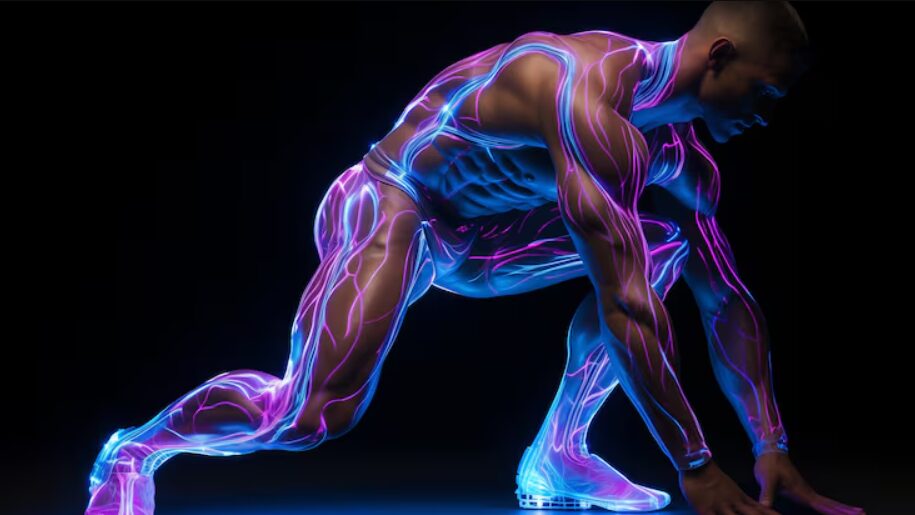
Sprinting is one of the most direct ways to recruit fast-twitch fibers because it demands maximal speed under real movement conditions. When you sprint at full effort, your nervous system activates Type II fibers immediately, making sprint drills essential for speed and power development.
Focus on short distances, 10 to 40 meters, where you can maintain maximum intensity throughout each rep. Full recovery between sets is non-negotiable; incomplete rest reduces speed output and shifts the workload toward slow-twitch fibers. Start each sprint from a static position to emphasize explosive acceleration. Integrate two sprint sessions weekly, keeping total volume low to preserve quality.
As your mechanics and conditioning improve, introduce resisted sprints using sleds or bands to increase recruitment demand further.
Use Olympic Lifts to Recruit More Fast-Twitch Fibers
Olympic lifts like the power clean and snatch are among the most effective tools for recruiting fast-twitch fibers because they require you to move heavy loads as fast as possible. That combination of maximal force and high velocity is exactly what fast-twitch muscle fibers will do.
When you perform a power clean, your nervous system fires rapidly to coordinate explosive hip extension, pulling your entire posterior chain into action. You’re not just lifting weights. You’re training your body to produce force instantly.
Keep reps low, between one and three, to maintain bar speed and intensity. Once your technique breaks down, stop the set. Sloppy Olympic lifts increase injury risk considerably. Prioritize speed over load, and your fast-twitch muscle fibers will respond.