

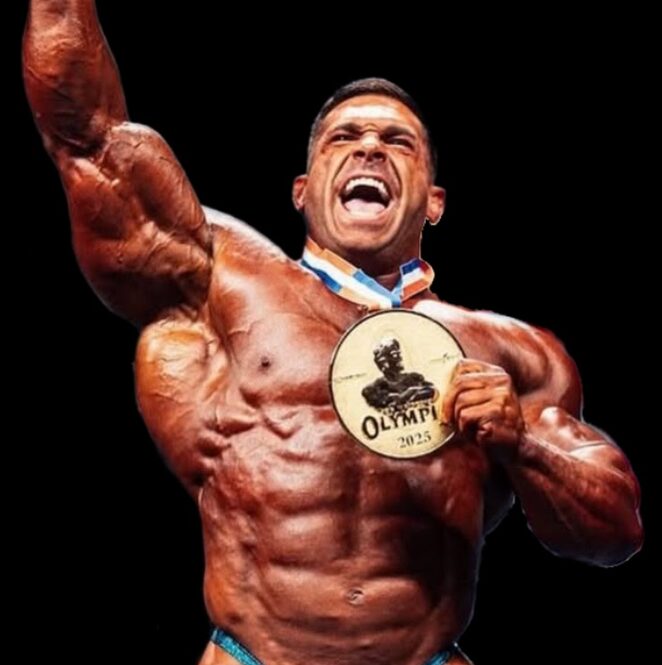
Derek Lunsford reacts to Dorian Yates’ harsh criticism that today’s champions look like “fridges” lacking aesthetic appeal.
Lunsford champions his generation’s advanced hypertrophy techniques, cutting-edge supplementation, and sports science integration, arguing they maintain aesthetic standards while achieving unprecedented muscle density.
This clash highlights the ongoing divide between Yates’ brief HIT philosophy and Lunsford’s high-volume approach, with both methods having produced champions and raising questions about bodybuilding’s evolving identity.
What Dorian Yates Actually Said About Modern Bodybuilding
Dorian Yates hasn’t shied away from critiquing modern bodybuilding; his specific comments about today’s Mr. Olympia competitors have sparked significant debate.
Yates believes current champions don’t represent the “ultimate male physique” that should define the sport’s pinnacle. He’s particularly critical of physique standards, describing modern competitors as resembling “fridges” due to their height and proportional issues.
Yates consistently points to legends like Arnold Schwarzenegger and Lee Haney as examples of ideal bodybuilding development. His competitive strategy during his own era emphasized mass and conditioning, but he argues that bodybuilding evolution has strayed from aesthetic principles.
You can see his concern that today’s physiques lack the visual appeal and proportionate muscle development that once defined championship-caliber competitors in bodybuilding’s golden era.

Derek Lunsford Fires Back: Defending Today’s Training Methods
When Derek Lunsford responded to Dorian Yates’ critique, he didn’t just defend his own physique. He championed an entire generation’s approach to bodybuilding excellence.
You’ll notice that Derek Lunsford’s training philosophy represents a significant evolution from past methods. He’s embraced advanced hypertrophy techniques that maximize muscle density through precise volume manipulation and periodization strategies that weren’t available during Yates’ era.
Lunsford’s nutrition strategies incorporate cutting-edge supplementation and macro timing that allow modern competitors to maintain fuller, more conditioned physiques year-round. He’s a champion who’s integrated sports science with traditional bodybuilding principles, creating superior muscle quality and symmetry.
His approach proves that today’s methods aren’t inferior. They’re simply more sophisticated, allowing athletes to push beyond previous limitations while maintaining the aesthetic standards that define championship physiques.
Old School HIT vs. High Volume
Behind this philosophical clash lies a fundamental debate about training methodology itself. You’re witnessing the eternal battle between Yates’ legendary HIT approach and Lunsford’s modern high-volume techniques.
Yates built his championship physique through brief, brutally intense sessions focused on maximum intensity techniques and extended recovery methods. His philosophy emphasized quality over quantity, believing you’d achieve superior conditioning through fewer, more focused workouts.
Lunsford represents today’s split routines mentality, where you’ll train multiple times per week with higher volume. Modern champions utilize advanced intensity techniques while maintaining frequent training sessions. The strength progression debate centers on whether you’ll build more muscle through Yates’ rest-heavy approach or contemporary high-frequency methods.
Both philosophies have produced champions, leaving you to decide which training philosophy truly reigns supreme in bodybuilding’s evolution.

Why Bodybuilding Legends Keep Attacking the New Generation
Since Dorian Yates first criticized Derek Lunsford’s physique, you’ve witnessed an escalating pattern of legendary champions publicly questioning today’s bodybuilding standards. The pro bodybuilding community faces a generational divide where veterans believe modern athletes lack aesthetic appeal despite advanced periodization methods.
You’ll notice legends consistently attack contemporary physiques, claiming today’s competitors sacrifice proportions for mass. They argue that while current athletes excel at peak week conditioning, they’ve lost the classic v-taper and stage presence that defined earlier eras. Veterans like Yates remember when posing emphasized flow and artistic presentation.
This criticism stems from nostalgia for their competitive period, when they established the sport’s foundation. However, you’re seeing these attacks create unnecessary division rather than constructive dialogue about bodybuilding’s evolution.
Who’s Right About Bodybuilding’s Direction?
While both Dorian Yates and Derek Lunsford present compelling arguments about bodybuilding’s trajectory, the truth lies somewhere between their opposing viewpoints.
Yates champions the aesthetic ideals that defined his era, emphasizing proportion and public appeal. His concerns about modern physiques resembling “fridges” highlight legitimate questions about mass versus aesthetics.
However, Lunsford’s defense of contemporary bodybuilding isn’t without merit. Today’s athletes showcase unprecedented conditioning and muscle density that previous generations couldn’t achieve. The sport’s technical advancement is undeniable.
The reality? Both perspectives hold value. Yates preserves bodybuilding’s artistic heritage while Lunsford pushes physical boundaries. You’re seeing bodybuilding’s identity crisis. Should it prioritize mainstream appeal or athletic extremes? Perhaps the answer isn’t choosing sides but finding balance between tradition and progress.