
You’ll likely see modest endurance improvements from mitochondrial supplements, with research showing 5-15% gains in exercise capacity for some athletes. CoQ10 and L-Carnitine have the strongest scientific backing, potentially reducing fatigue and enhancing aerobic performance. However, your results depend heavily on baseline fitness, genetics, and training status.
Many endurance athletes report better sustained energy and recovery, though benefits typically take 4-6 weeks to appear. Understanding which specific ingredients work best can help optimize your investment.
Do Mitochondrial Supplements Actually Boost Athletic Performance?
How effectively can mitochondrial supplements translate cellular energy improvements into measurable athletic gains? The research presents mixed results. While mitochondrial supplements theoretically enhance ATP synthesis and oxidative capacity at the cellular level, translating these benefits into real-world performance improvements isn’t guaranteed.
Studies show CoQ10 can reduce oxidative stress during exercise, but endurance gains remain inconsistent across athletic populations. PQQ demonstrates promise for mitochondrial biogenesis, yet direct performance benefits need more validation. L-Carnitine shows modest improvements in fatigue resistance and aerobic capacity, particularly during longer training sessions.
Your individual response depends on baseline mitochondrial function, training status, and genetic factors. Elite athletes often see minimal benefits since their mitochondrial systems are already highly optimized, while recreational athletes may experience more noticeable improvements in endurance capacity.

Which Mitochondrial Supplement Ingredients Have Scientific Backing?
While numerous compounds claim mitochondrial benefits, only a select few possess robust scientific evidence supporting their use in athletic contexts.
Coenzyme Q10 stands out with the strongest research foundation, demonstrating measurable improvements in oxidative phosphorylation efficiency and reduced exercise-induced fatigue in multiple studies. CoQ10 is particularly effective at doses of 100-300mg daily for enhancing athletic performance during prolonged activities.
L-carnitine shows consistent benefits for fatty acid metabolism and recovery, with research supporting 2-3 gram daily doses. PQQ represents emerging science, with preliminary studies suggesting enhanced mitochondrial biogenesis, though human athletic performance data remains limited.
While these three ingredients show promise, you should prioritize CoQ10 and L-carnitine given their more extensive research profiles in athletic populations.
What Results Do Athletes Report From Mitochondrial Supplements?
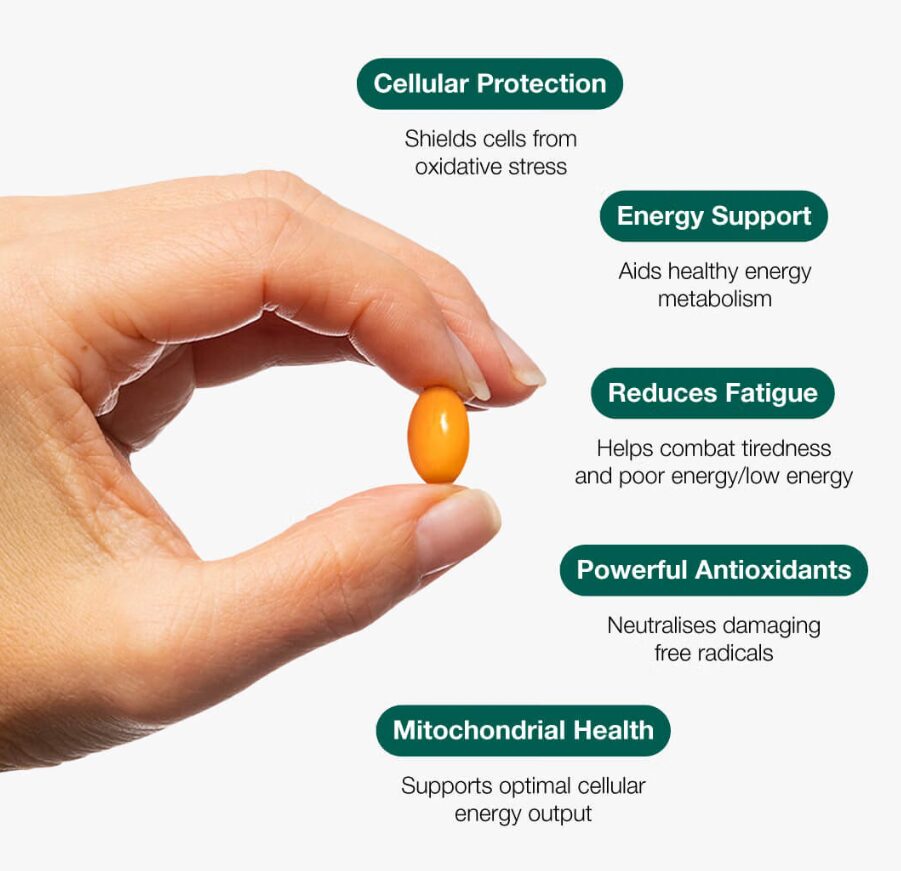
Beyond the laboratory data, real-world athlete experiences provide valuable insights into mitochondrial supplementation effectiveness. Endurance athletes commonly report improved training endurance during longer sessions, with less perceived fatigue at familiar intensities.
Many cyclists and runners note enhanced recovery efficiency between high-intensity intervals and reduced next-day soreness.
Coenzyme Q10 users frequently describe sustained energy levels throughout workouts, particularly during the latter portions of extended training sessions. Athletes experimenting with supplement dosing often find ideal results at higher ranges than initially recommended. Some report noticeable improvements in exercise metabolism, feeling more efficient at burning both carbohydrates and fats.
However, you should expect individual variability in responses. While many athletes experience benefits within 4-6 weeks, others report minimal changes despite consistent supplementation.
How Do Mitochondrial Supplements Work In Your Body?
When mitochondrial supplements enter your system, they target specific biochemical pathways that govern cellular energy production.
Coenzyme Q10 integrates into your electron transport chain, facilitating more efficient ATP synthesis while providing free radical mitigation to protect your mitochondria from oxidative damage. PQQ works differently by promoting mitochondrial biogenesis, literally helping you grow new energy-producing organelles within your muscle cells.
L‑Carnitine helps your body use energy more efficiently by transporting fatty acids into the mitochondria, where your cells convert them into usable fuel. It improves your ability to burn fat during prolonged exercise, sparing glycogen stores for higher-intensity efforts.
These supplements don’t create energy from nothing. They optimize your existing cellular machinery, potentially allowing you to sustain higher training intensities and recover more efficiently between sessions.
Are Mitochondrial Supplements Worth Your Training Budget?
How much should you realistically expect to spend on mitochondrial supplements, and do the performance gains justify the cost? Quality CoQ10 typically costs $30-60 monthly, while PQQ ranges from $40-80. These investments target electron transport chain support for improved muscle performance, but results vary greatly between individuals.
Creatine phosphate supplements offer the most cost-effective option at $10-20 monthly with proven endurance benefits. However, expensive mitochondrial cocktails don’t guarantee proportional performance improvements. Your training consistency, nutrition quality, and sleep habits influence outcomes more than supplementation alone.
Consider starting with creatine before investing in pricier options like CoQ10 or PQQ. Monitor your training metrics carefully. If you’re not seeing measurable endurance improvements after 8-12 weeks, reallocate your budget toward proven fundamentals like quality nutrition and recovery protocols.