
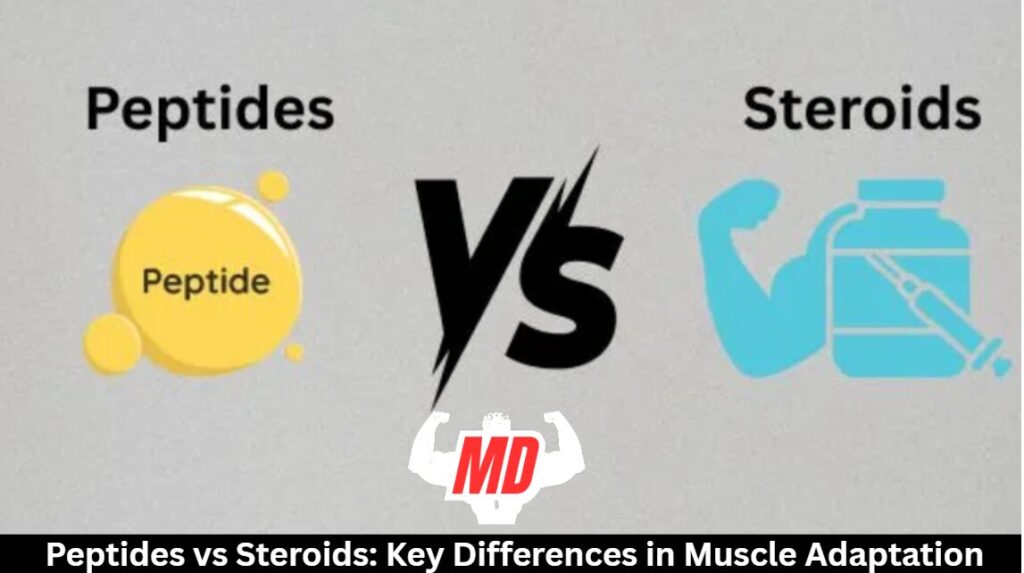
Peptides boost your body’s natural growth hormone signaling to help your muscles grow. Anabolic steroids, on the other hand, send synthetic hormones directly into your body, which don’t follow regular rules. Steroids work faster (2–4 weeks) than peptides (6–12 weeks), but they can also cause major problems like liver damage and testosterone suppression.
Peptides operate with your body’s natural hormones and have fewer negative effects, although both are in legal gray zones. Knowing how these things work can help you make a smart choice.
What Are Peptides and Steroids for Building Muscle?
Peptides are short sequences of amino acids that help your body’s natural hormonal signaling pathways perform better. They help cells heal, speed up healing, and release growth hormones without directly replacing your hormones. This method helps your body keep its natural equilibrium while also speeding up protein synthesis, which helps your muscles grow.
On the other hand, anabolic steroids are synthetic testosterone derivatives that attach directly to androgen receptors in muscle tissue. They speed up the rate of protein synthesis and nitrogen retention by a lot, which makes muscles grow quickly.
But steroids stop your body from making hormones naturally, which changes how your endocrine system works during the adaptation phase.

Which Delivers Faster Results: Peptides Or Steroids?
Anabolic steroids always beat peptides when it comes to how quickly they help muscles adapt. Steroids usually cause notable muscle growth within 2 to 4 weeks, while peptides may take 6 to 12 weeks to show changes.
Anabolic steroids flood your androgen receptors, which speeds up protein synthesis and nitrogen retention by a lot. This intensive method leads to quick gains in strength and big increases in muscular mass. But you’re going against your body’s natural ways of healing itself.
Peptides help your cells operate better over time by boosting the processes that are already going on. They don’t make quick improvements like steroids do, but they do help recovery and long-term performance improvement. You’ll see more steady and natural improvement that works with how your body adapts instead of overwhelming it.
How Peptides and Steroids Build Muscle in Different Ways
You may better understand these disparities in speed by looking at how each chemical truly causes muscle growth at the cellular level. Peptides operate by boosting your body’s natural growth signals, speeding up recovery by speeding up cellular repair and targeted protein synthesis.
They don’t change your hormones directly; instead, they make the pathways that already exist work better for muscular adaptation.
Steroids work more aggressively by attaching to androgen receptors and greatly boosting testosterone activity. It makes a strong anabolic environment that makes protein synthesis and muscle fiber growth happen quickly. Peptides help your body adapt gently, whereas steroids speed up hypertrophy by overriding natural hormonal control.
The main distinction is that peptides help muscles adapt naturally, while steroids artificially boost this process by changing hormones.

Peptide vs. Steroid Side Effects
Why do these two ways to build muscle have such different negative effects? The explanation is in how they work differently in your body’s systems.
Peptide adverse effects usually happen in one place, such as inflammation at the injection site, water retention, or transient joint pain. Peptides usually don’t mess up your body’s hormonal regulatory systems too much because they act through natural cellular signaling pathways.
The adverse effects of steroids are even more significant. You could have problems, including low testosterone, liver damage, heart strain, and changes in mood. These chemicals change your endocrine system in a big way, making you dependent on them and slowing down your body’s normal muscle repair mechanisms.
Steroids mess up your body’s natural endocrine balance and make you dependent on hormones, which can lead to health problems that last for a long time.
There are big differences between the techniques when it comes to your long-term health. Peptides may induce temporary changes, but steroids can permanently harm hormones, so a lot of therapy is needed after the cycle to get things back to normal.
Availability of Peptides and Steroids
In addition to the health hazards, the laws around peptides and steroids make them much harder to get for anyone who is thinking about using them. Most nations have laws against anabolic steroids, which means you need a prescription to use them for medical reasons and face harsh legal consequences if you have or distribute them without permission.
Peptides are in a more complicated legal gray area. Some research peptides are not safe for people to eat, but they can often be bought from research chemical vendors. But it doesn’t imply they’re safe or good for helping your muscles adapt.
Both of these substances can mess up the body’s natural hormone synthesis and create serious negative effects. Part of the reason for the legislative limits is to keep consumers safe from these known health hazards. You should focus on legal, evidence-based ways to build muscle.